Salmonella spp., Salmonella enterica subsp. enterica serovar Typhimurium and serovar Enteritidis
Description
The Sal3Sp qPCR Triplex comprises a series of specific targeted reagents designed for Salmonella spp., Salmonella enterica subsp. enterica serovar Typhimurium and Salmonella enterica subsp. enterica serovar Enteritidis detection by using multiplexed qPCR. Salmonella is a genus of rod-shaped, Gram-negative, non-spore-forming bacteria belonging to the Enterobacteriaceae family. Salmonella species cause illnesses such as typhoid fever, paratyphoid fever, and salmonellosis. Transmission can occur via zoonosis, with many infections resulting from ingestion of contaminated food or water, or contact with droplets carrying the pathogen.
Salmonella has two recognised species: S. bongori and S. enterica, the latter of which has six subspecies with multiple serovars that differ in antigenic specificity and are defined by somatic (O) and flagellar (H) antigens. S. enterica subsp. enterica serovars Typhimurium and Enteritidis can colonise a broad range of animals with minimal clinical effects.
However, in humans, they can cause salmonellosis, an acute gastroenteritis disease characterised by symptoms including diarrhoea, abdominal cramps, fever and nausea. S. enterica subsp. enterica serovar Typhimurium is primarily associated with pork, beef and poultry, whereas S. enterica subsp. enterica serovar Enteritidis is mainly associated with eggs and poultry. Novel or uncharacterised serovars may exhibit cross-reactivity with the assays.

Kit Content and Prices
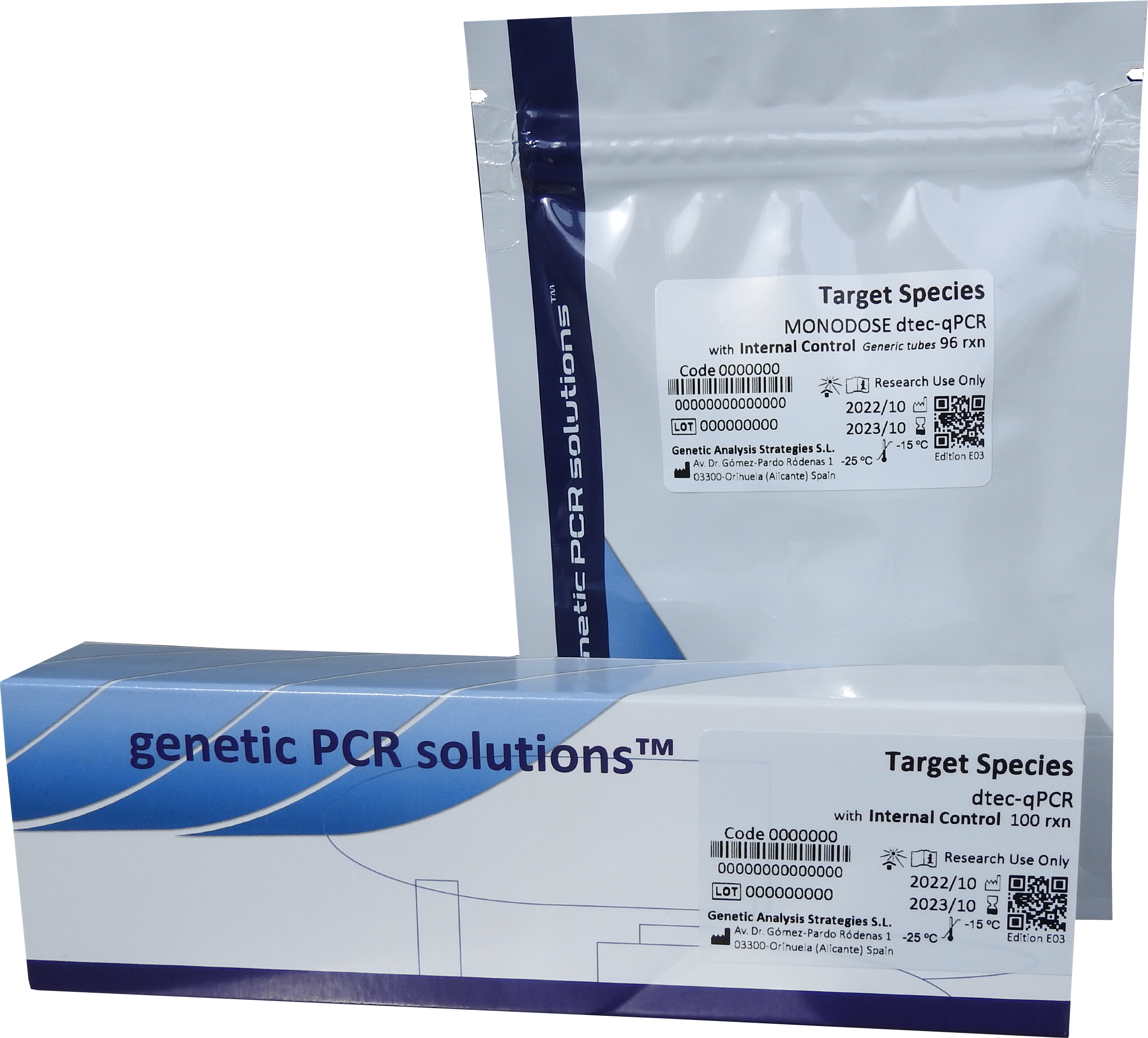
GPS™ primers and probes are sold for research use only
All GPS™ Kits are available in F100 and MONODOSE Format
GPS™ reagents are compatible with all qPCR devices